Re-envisioning the Rover homepage

Background
Rover.com is a 2-sided pet care marketplace. For two years, I led the UX team responsible for Rover’s core suite of services, as well as growth and new emerging business lines.
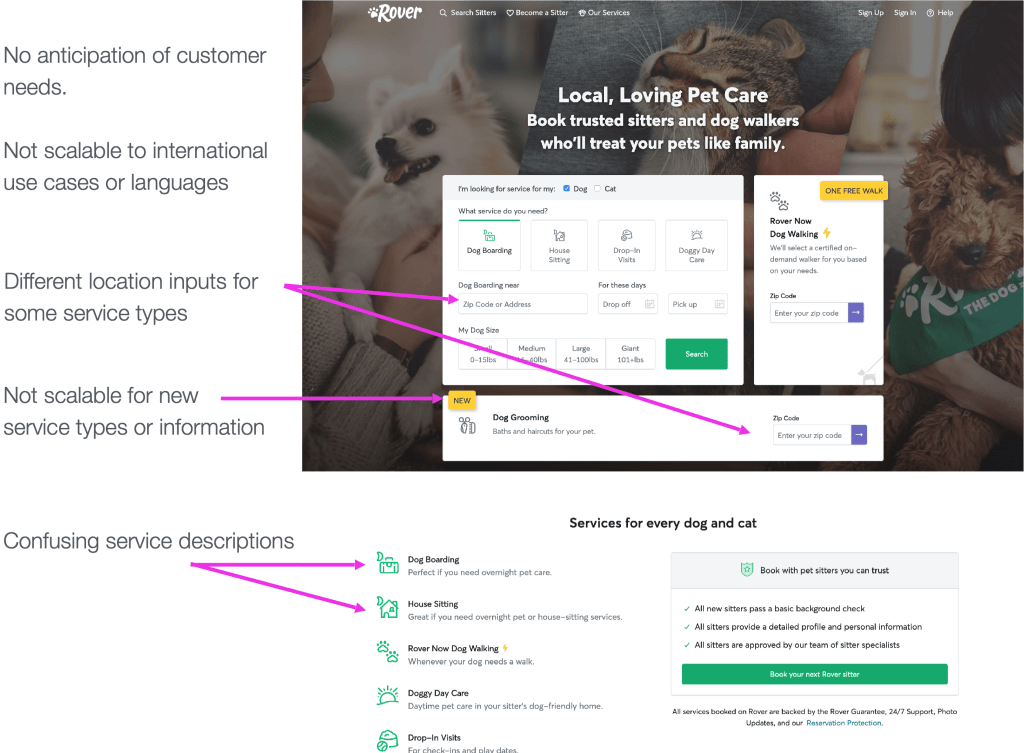
In 2019, my team uncovered user confusion and functionality gaps on the Rover homepage, impeding our ability to convert new users. At the time, we had about 300K users, with services being booked about once every 3 seconds, but our need to continue that growth and attract new users was critical to our ongoing success.
Problem statement
Visitors to the Rover homepage will only take a few seconds to understand what Rover is and if Rover will solve their pet care or pet care business needs. With our existing gateway experience, we struggled to communicate our value and why visitors should trust us with their pets.
Unique challenges
- No PM support available at start of project. This gave the UX team a unique opportunity to lead product thinking, while bringing future partners along for the ride.
- The UX Designers available to take on the project were new to vision work, requiring coaching and guidance
- 13+ stakeholder teams owned real estate on the homepage or relied on the gateway experience to bring users to their programs.
- We needed to design for multiple user types with very different needs (ex. Pet owners who were new to Rover, new pet sitters, returning pet owners, returning sitters who are still growing their business, experienced sitters)
- The design needed to be flexible enough to meet the needs of 10 countries, each with unique product offerings and restrictions.
Vision framework

Because my designers hadn’t previously had the opportunity to own and lead a vision project, they were unsure where to start. I used this as an opportunity to help them develop an important new set of skills. I gave them a loose, high-level framework to work within, and then helped them define steps and milestones. I also introduced them to a few methodologies they could choose between for achieving each milestone.
Discovery phase
- Identified “driving questions” – What are the most important questions we need answers to to make sure we’re solving the right problem effectively?
- Gathered existing data and research to inform and answer driving questions
- Baseline user testing on current homepage
- Competitive analysis of other homepage examples
- 13 stakeholder interviews
Defining requirements
We leveraged the answers to our driving questions to define the problem statement, objectives, constraints, project requirements, success metrics, and homepage tenets.
Project requirements
- Create an international-friendly, scalable solution for Rover’s growing suite of services and future product offerings.
- Be clearly inclusive to all pet types we support.
- Customers should be able to look at the home page for 5 seconds and have a clear understanding of what Rover is.
- Create a framework to inform what does (or doesn’t) get placement on the homepage.
- Use the data we have on all our visitors to personalize the product experience and anticipate their needs.
Project Tenets
- Pets are the reason people are here.
- Be local.
- Be simple and memorable, not thorough and exhaustive.
- Show, don’t tell.
- Use what you already know to anticipate a user’s needs and personalize their experience to meet those needs.
- Optimize for people, not bots.
Understanding the userflow
Once we had the project defined, it was important to take a closer look at each of our user types and deep dive into fully understanding their unique needs, context(s) of use, what they already knew about Rover, what they need to know about Rover, and what Rover may already know about them. I introduced the designers to the process of Scenario Mapping so they could talk through and map out the needs and ideal experience for each user type.
We explored the needs of:
- Pet owners who were new to Rover and had an immediate need for pet care
- Pet owners who were new to Rover and just wanted to learn more
- Pet owners who were familiar with Rover, but hadn’t booked a stay yet
- Pet owners who had used Rover before
- Pet owners who use Rover regularly
- Someone who wants to become a sitter on Rover
- Someone who has signed up to become a sitter, but hasn’t had any bookings yet and needs to build their business
- Established pet sitters
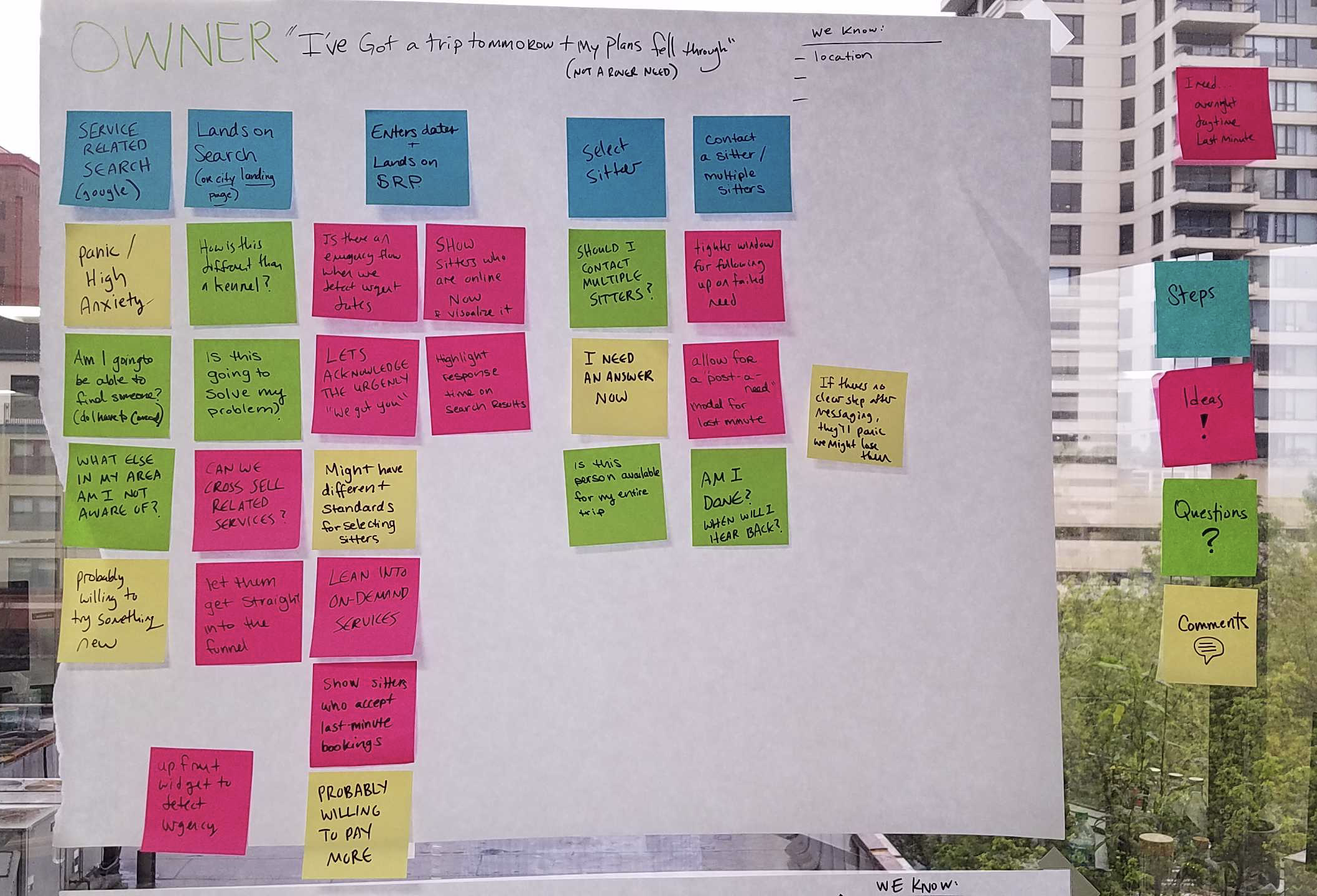
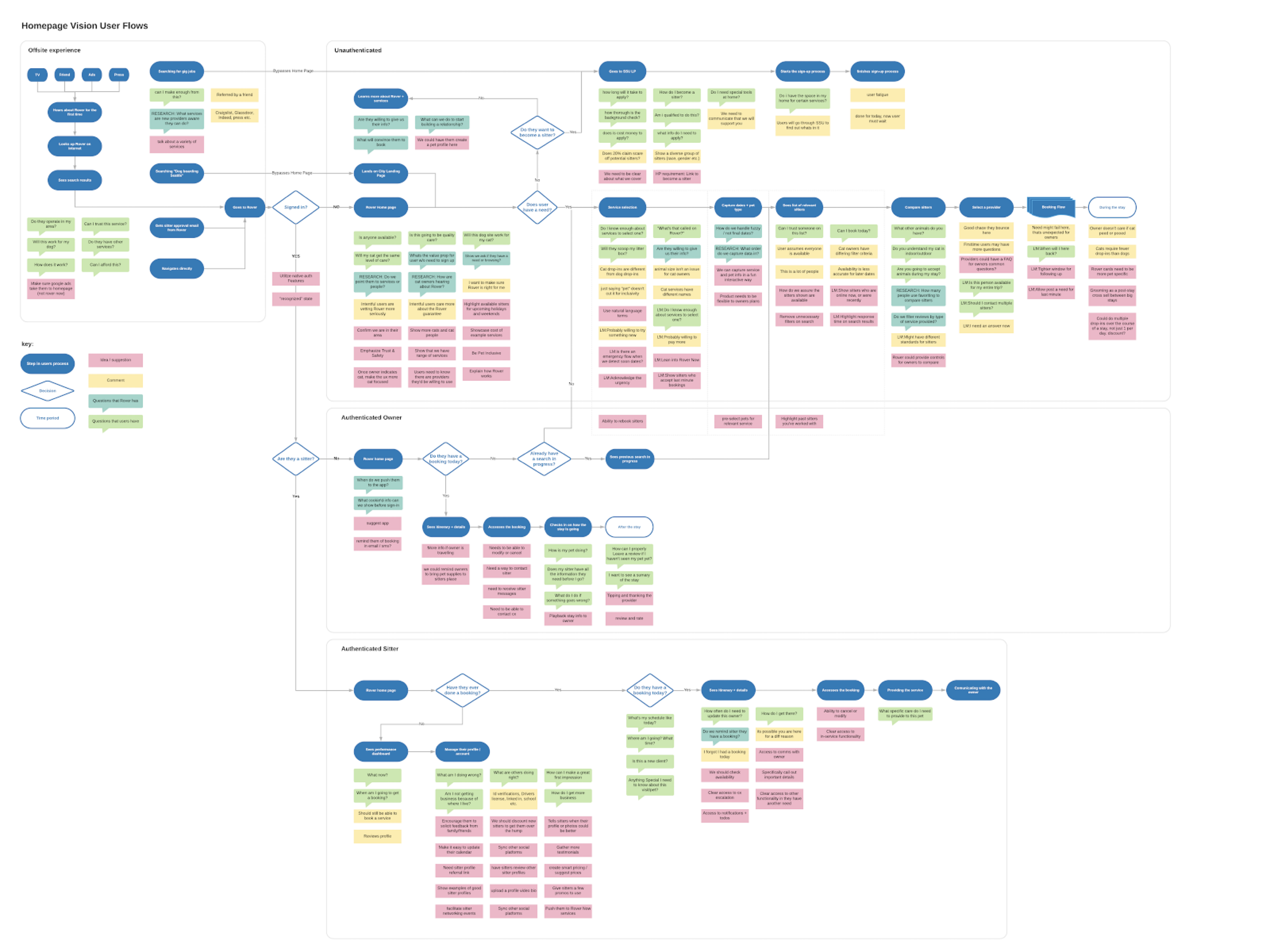
The scenario mapping exercise directly translated to a comprehensive user flow spanning all the different customer types, illustrating under which conditions, steps, or decision points individuals’ experiences diverged or aligned.
Ideation: A collaborative phase
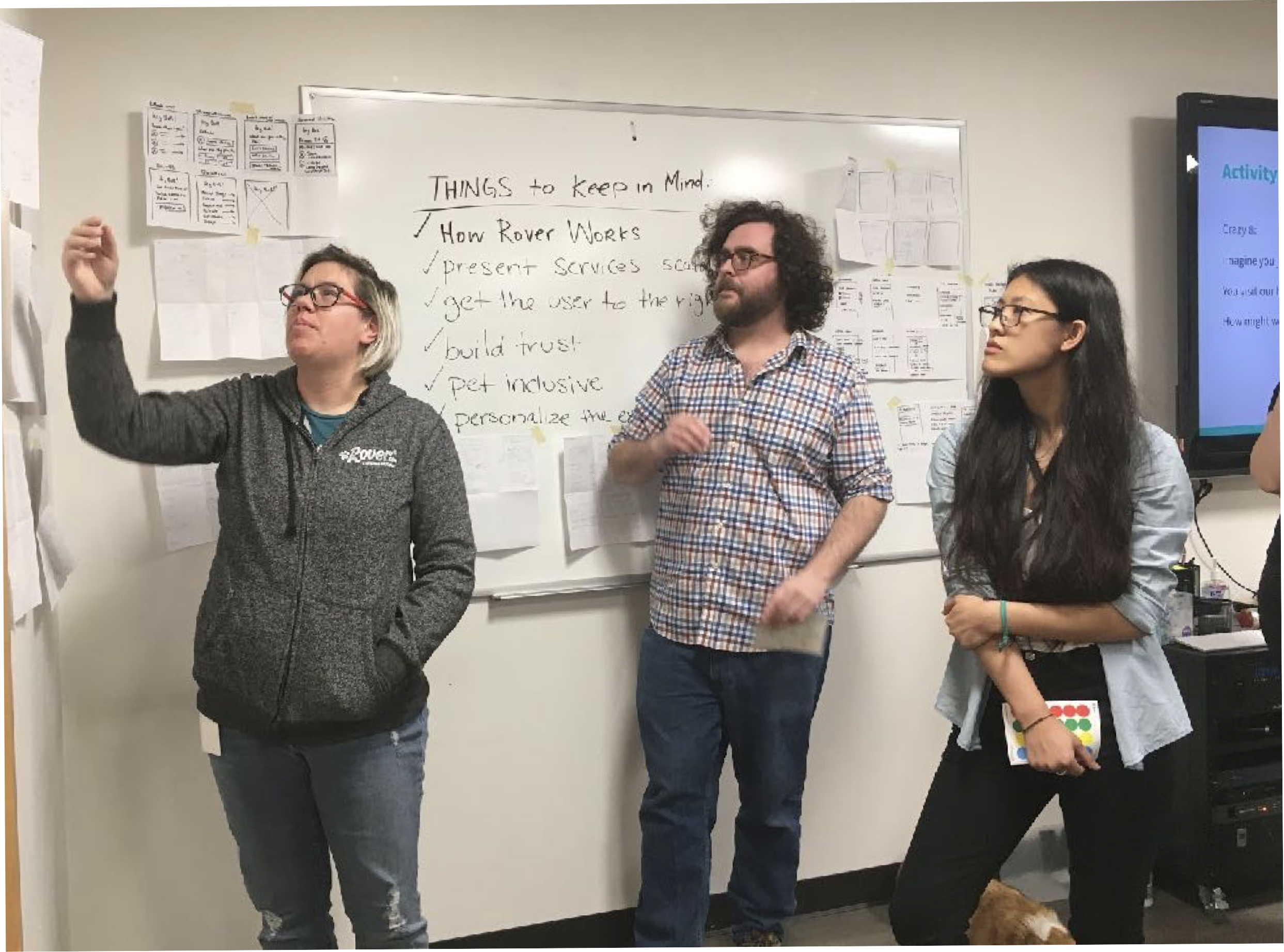
Because were working with a large number of stakeholders, the designers set up a design charrettes activity with representatives from each partner team. They asked the group to sketch out potential homepage experiences for different user types based on the discovery findings. This had the bonus effect of getting everyone involved, feeling heard, and ensuring they were excited about the progress we were making.
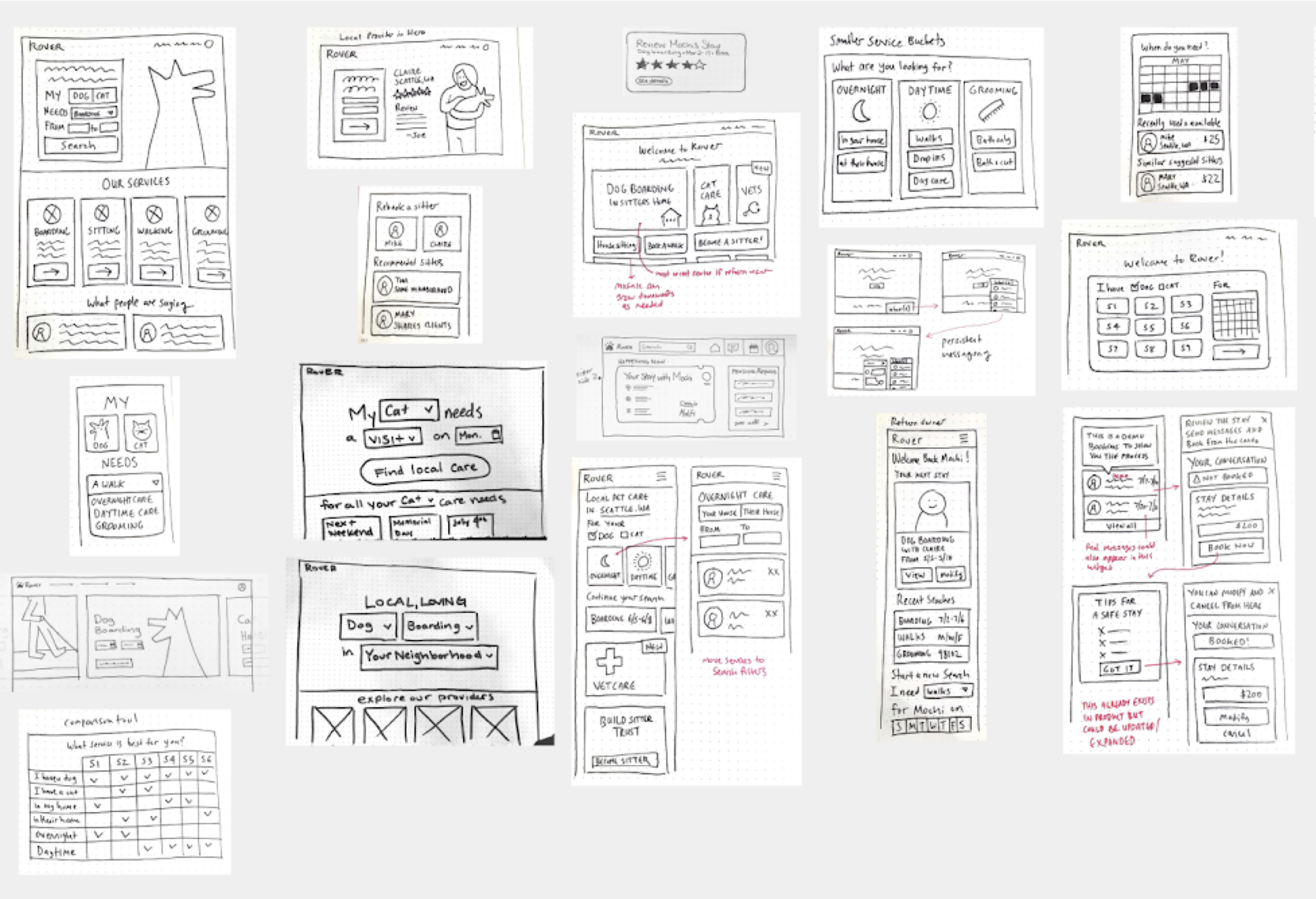
The cross-functional group discussed their favorite ideas, and then the designers translated them into more refined wireframes.
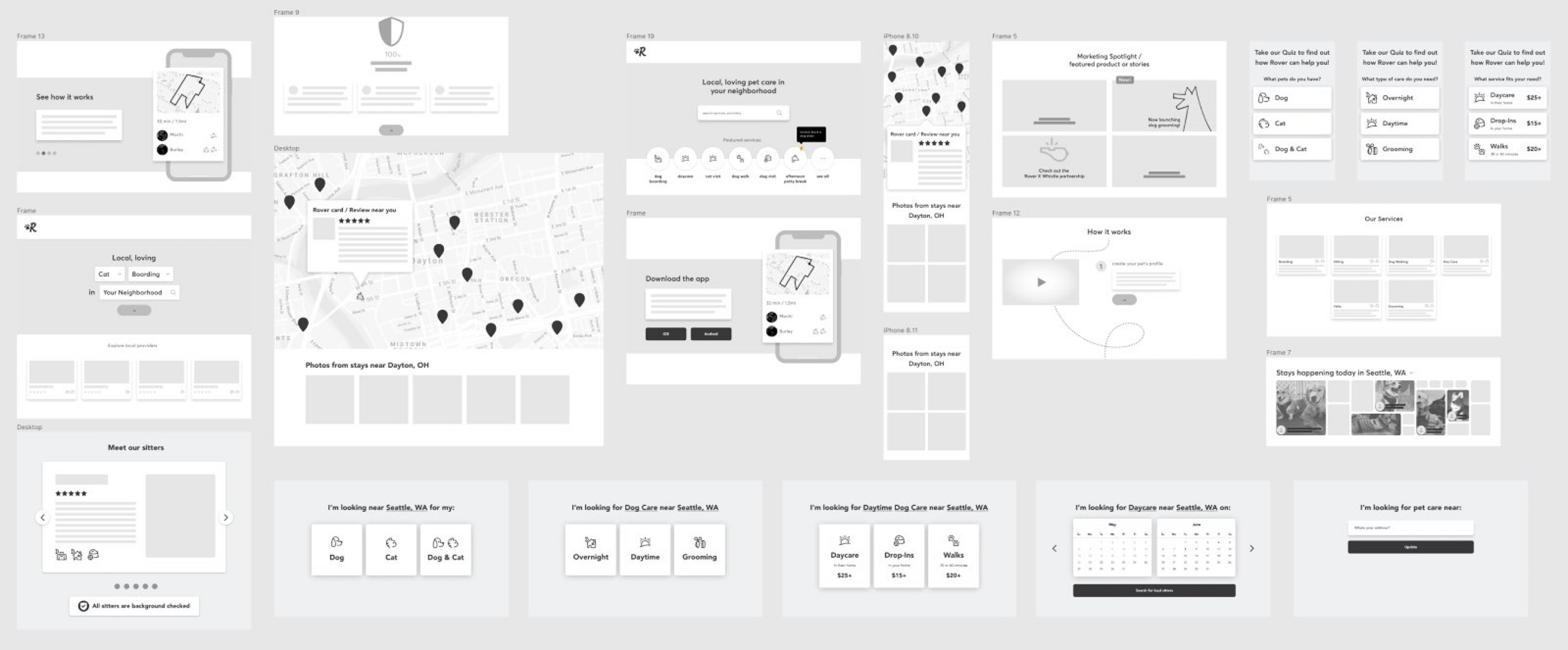
And then refined those again to create a select group of unique high-level concepts to get user feedback on.
Concept testing, iteration, and refinement
The team conducted three rounds of user testing.
Round one explored six different concepts for how a customer might select the pet service they’re looking for, and compared several different elements intended to build customer trust. Designers learned which elements, language, images, and messages inspired the greatest trust with new potential customers.
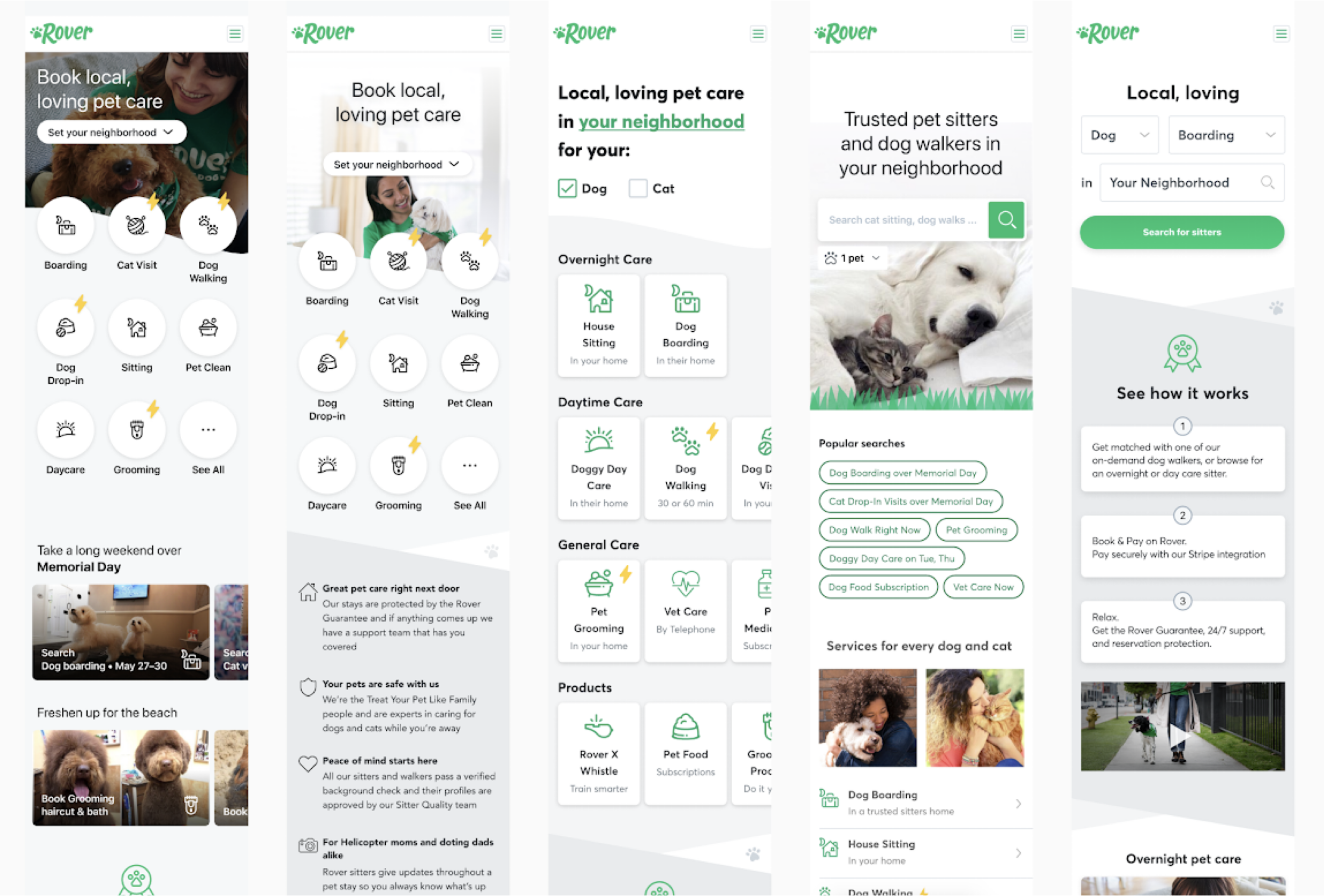
For round two, the team took the most successful concepts from the first round and refined, adapted, and combined them into two North Star experiences. Round three helped us further refine the winning North Star experience.
What we learned
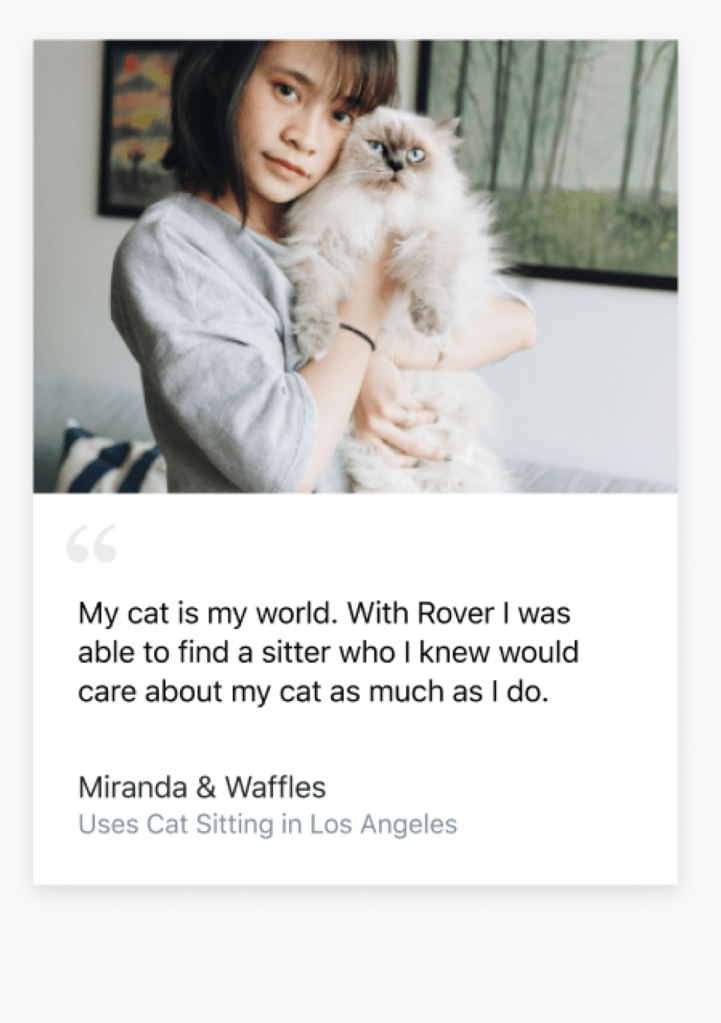
01 / Testimonials for trust building
- Testimonials were the most referenced element when we asked what builds trust. Customers asked for them when we didn’t include them and didn’t believe claims related to sitter quality when not accompanied by reviews.
- Background checks, professional-looking site design, and sitter quality claims were the next most important
- In our last two rounds of user testing we asked “Would you describe this site as trustworthy?” – 20/20 users said yes.
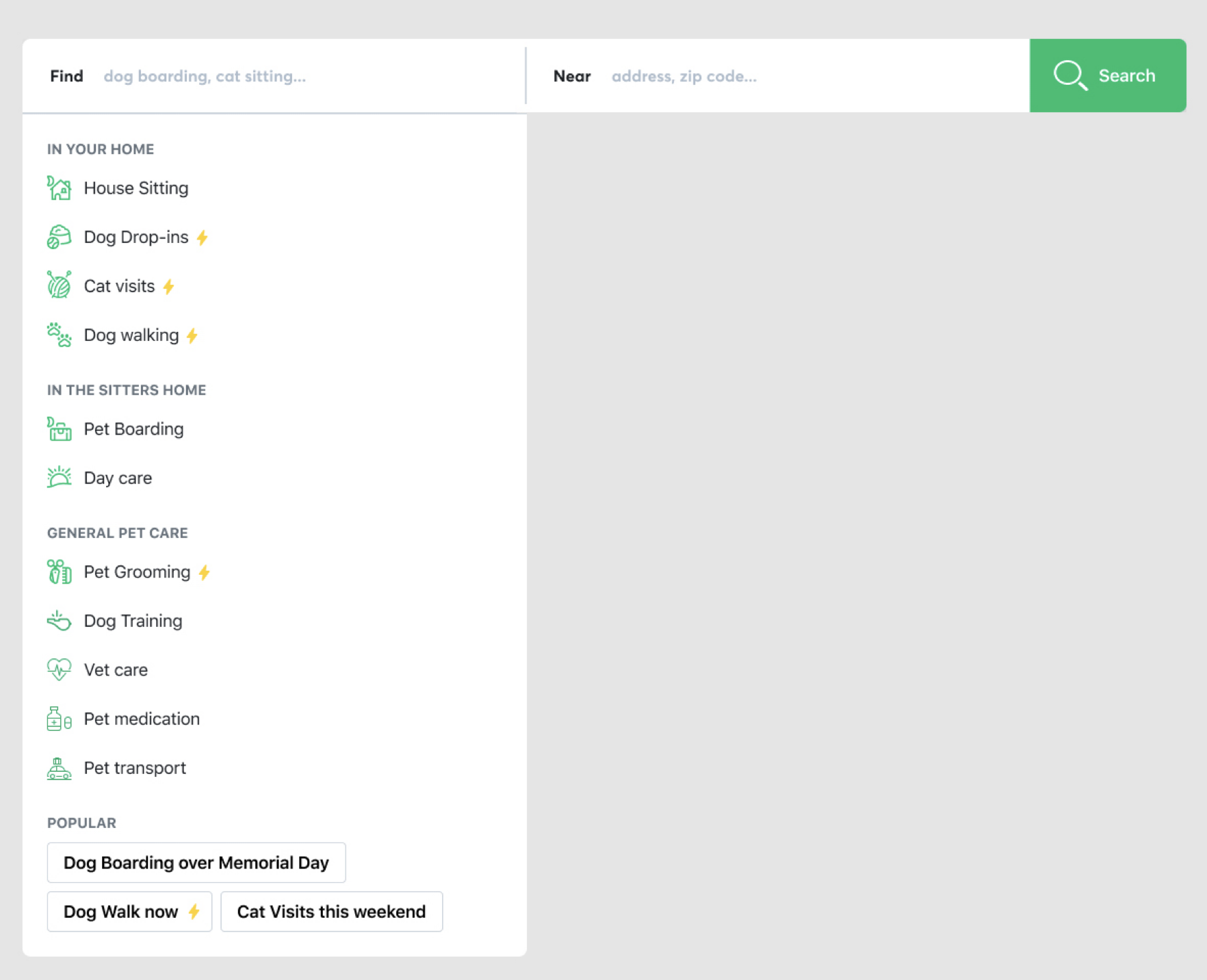
02 / A single, integrated search bar
- A predictive search bar was consistently the most intuitive entry point for our growing suit of services.
- A search bar additionally supported us un-tethering services from strict naming conventions, allowing us to present custom results based on user queries. For example, the phrases “cat hotel” or “dog minding” commonly used in Australia would both route the user to pet boarding services.
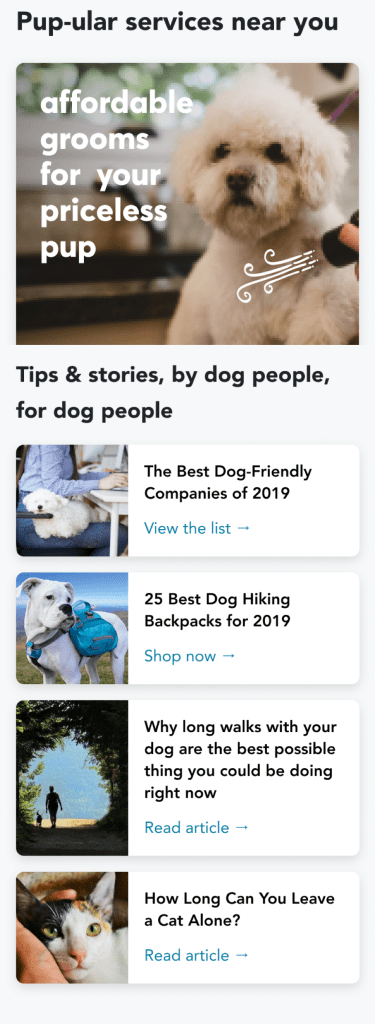
03 / “Discovery” content makes us an authority
- Including useful pet care information showed visitors that we were more than just a marketplace, we were all-inclusive experts on pets.
- It also gave users without an immediate need for a pet sitter a reason to return to Rover and keep us top of mind.
04 / Personalization is critical
There were way more opportunities than we’d taken advantage of yet to customize the experience for visitors.
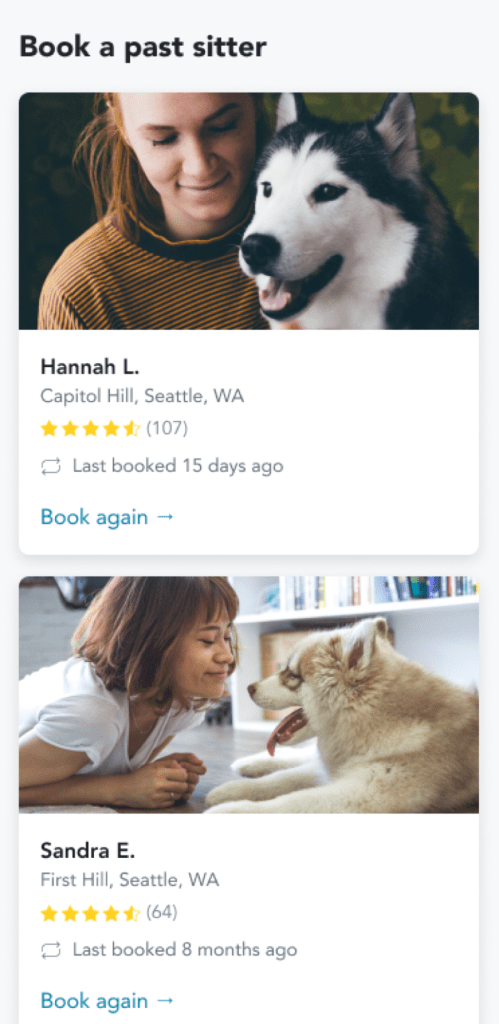
Personalize based on user information and past behavior:
- Prioritize recently used services and care providers
- Highlight services and promotions based on known pet information (ex. whether they have a cat or a dog)
- Customize site content based on known pet information (blog articles, imagery used, etc.)
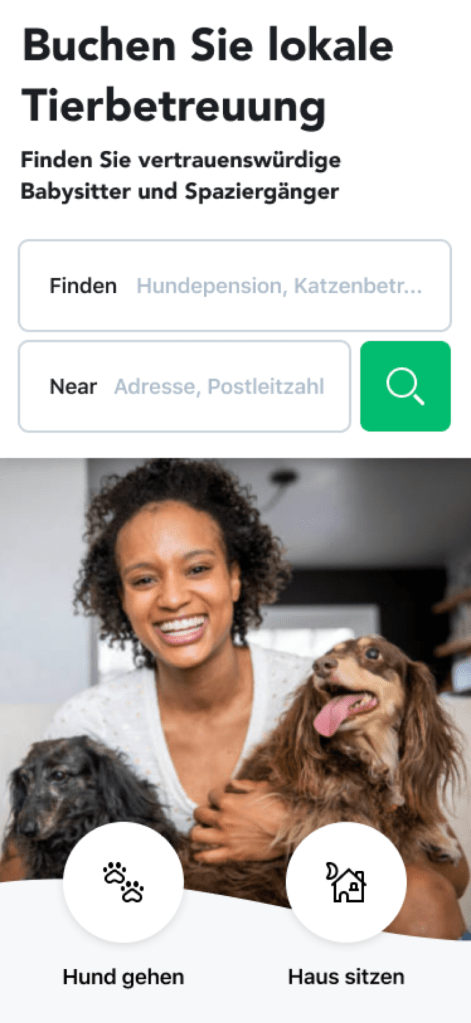
Customize by location
- Imagery should reflects a country’s culture
- Pet care services should be dynamically ordered by local popularity
- Services and promotions featured in the discover section must be relevant to the specific locale.
- Use locally relevant 3rd party verifications to build stronger trust.
05 / For returning sitters, skip the homepage entirely
- Pet sitters were best served by the Sitter Dashboard which was currently in development, and should be given that experience as their homepage.
Content framework
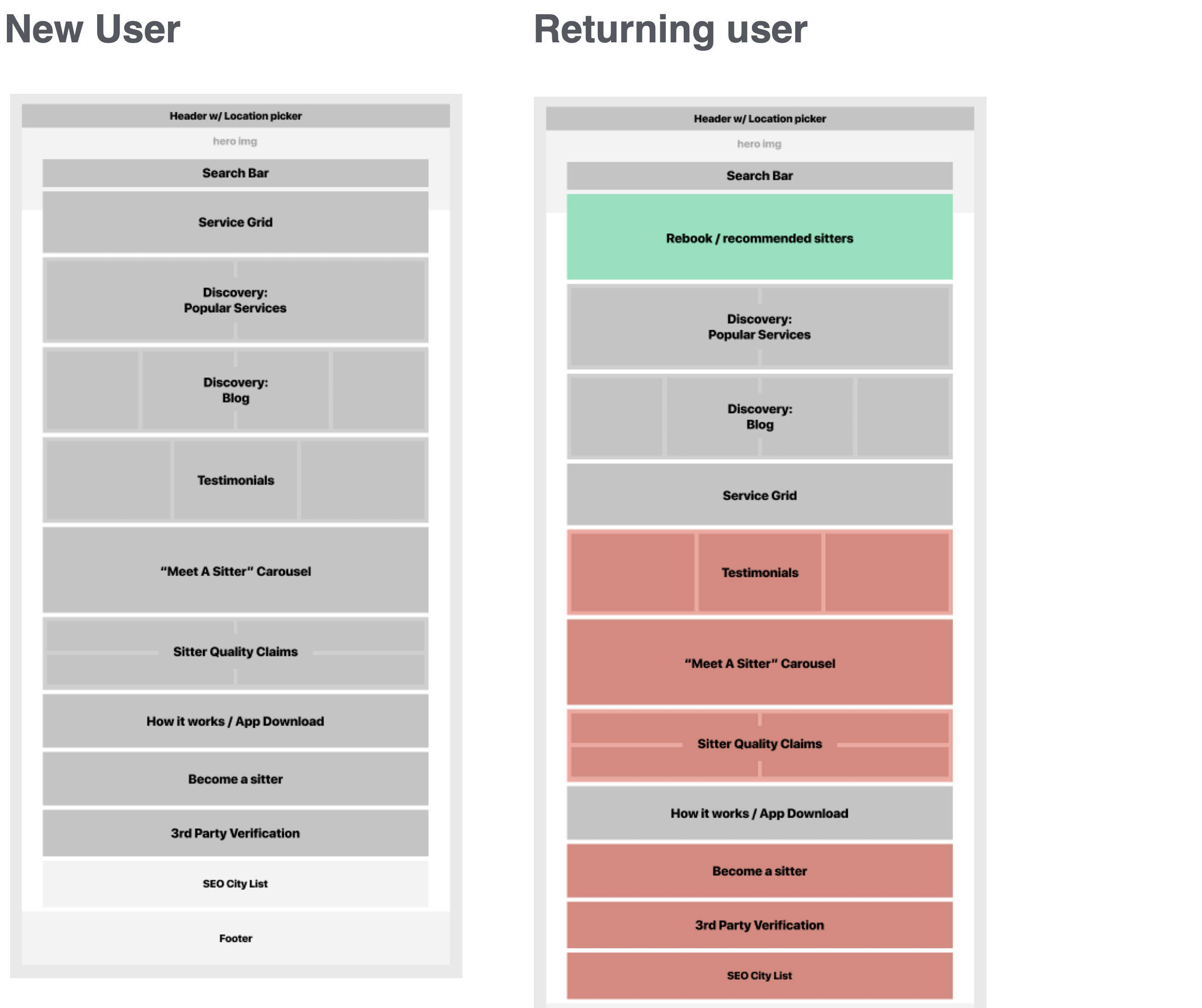
After aligning on which content types were most effective and the best means of display, we did another round of testing on various ordering options and created a dynamic content framework that could be added (shown in green) or be removed (shown in red) based on user type.
Our North Star design
Mobile web and native app experience
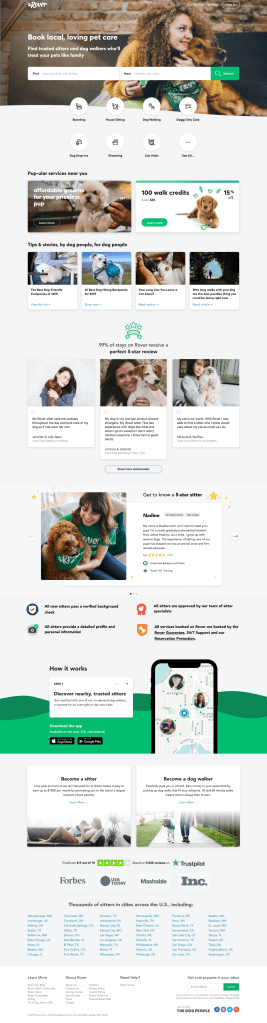
Desktop experience
View desktop experience
A phased approach to launch
This was the point where a PM partner became available to support. The designers worked hand in hand with our Director of Product to determine a phased approach and roadmap for testing into each element of the new Homepage design.
View phased launch plan
Phase One
Mobile launch Jan 2020
- Combined Service Selector MVP
- Location Picker
- Testimonials MVP
- Updating service descriptions within existing widget
- Updating trust & safety language within existing widget
Phase Two
Scheduled for Q3 2020
- Changeable hero photo and text by market
- Popular Services discovery module
- Rebook a sitter section
- Desktop phase one
Phase Three
Q4 2020
- All services page
- How it works / App Callout
- Blog articles discovery module
- Meet a sitter carousel
Phase Four
Q1 2023
- Search bar
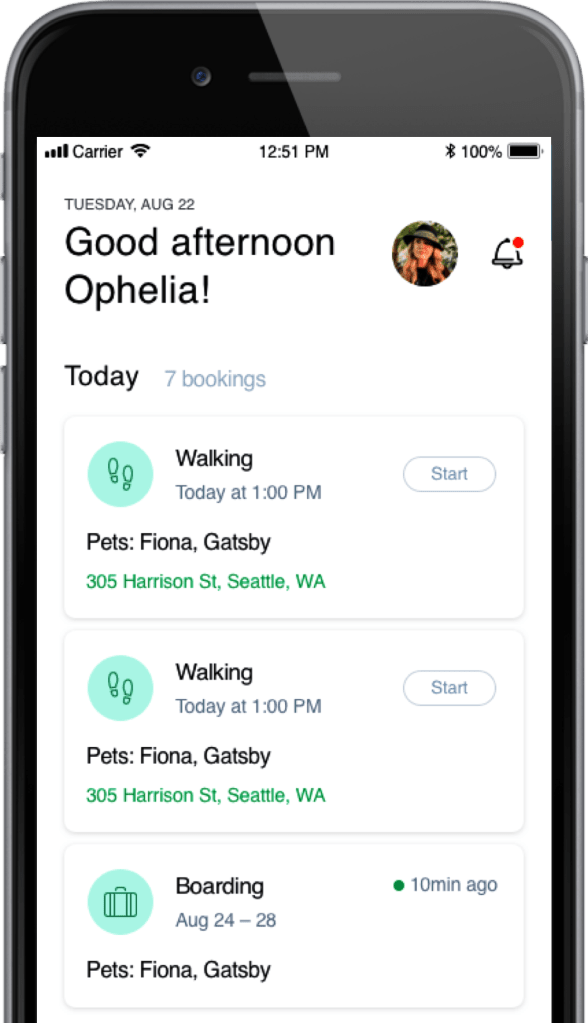
- Upcoming / Active Stay Widget
Outcome and impact
Phase One successfully launched on mobile in January 2020. From just that initial launch we saw:
- Reduced bounce on the homepage by 9%
- 3% increase in searches from the homepage, resulting in a 1% booking increase across both new and repeat customers
- Both designers were promoted after delivering this project
- Requests for UX-led vision work increased 3x
All content copyright Rebecca Shapiro 2023
 Rebecca Shapiro